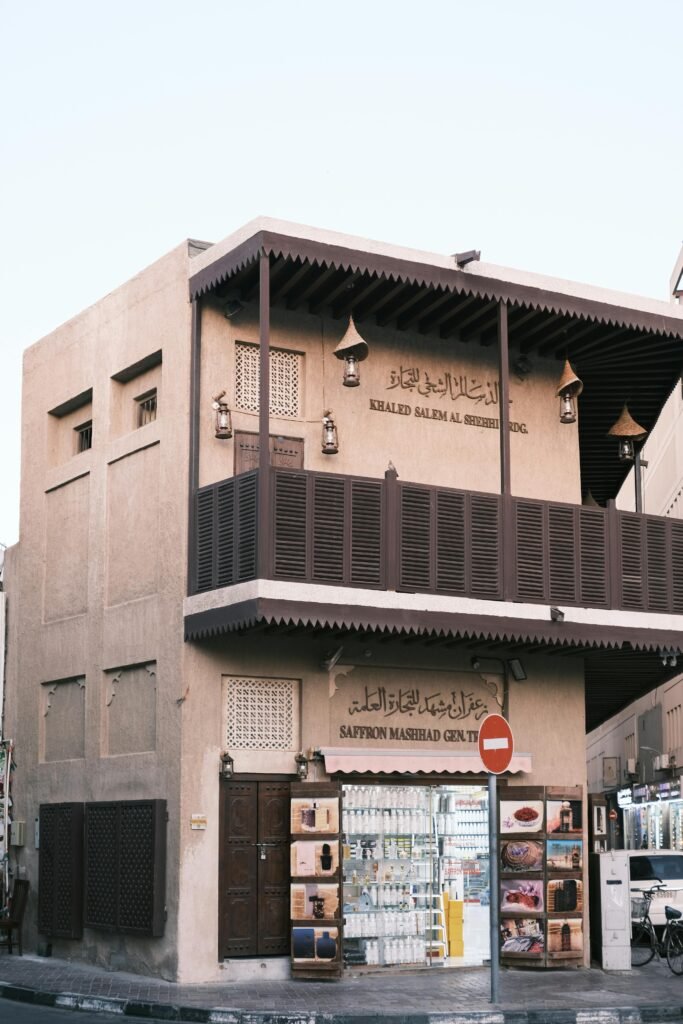
Dubai has become the world’s most compelling destination for capital flight in 2026 — a city where political neutrality, zero income tax, and one of the most transparent real estate regulatory frameworks on the planet converge to create a genuinely safe haven for high-net-worth individuals moving wealth out of volatile economies.
The Global Wealth Migration Landscape in 2026
The mechanics of capital flight have shifted dramatically over the past five years. Where wealthy individuals once defaulted to London, Geneva, or Singapore as their first port of call, Dubai has systematically dismantled every barrier that once made those cities more attractive. The result? The UAE recorded an estimated net inflow of over 6,700 millionaires in 2024 alone, and 2026 projections from wealth migration analysts suggest that figure has climbed past 8,000 annually — making Dubai the world’s number-one destination for high-net-worth individual (HNWI) relocation for the third consecutive year.
The drivers are not mysterious. Geopolitical instability across Europe, escalating tax burdens in the United Kingdom, India’s complex capital controls, and Pakistan’s ongoing economic turbulence have created a perfect storm of push factors. Dubai, with its AED-denominated assets pegged to the US dollar, full foreign ownership of freehold property since 2002, and a government that has consistently prioritised investor protection, sits at the precise intersection of safety, yield, and lifestyle that HNWIs are actively seeking.
Who Is Moving Capital — and From Where
The profile of the 2026 Dubai capital migrant is more diverse than any previous era. Russian oligarchs and Eastern European entrepreneurs who dominated headlines in 2022-2023 have been joined by a much broader cohort: Indian tech founders exiting after successful IPOs, Pakistani industrialists seeking USD-denominated asset preservation, British professionals exhausted by inheritance tax reforms, and Chinese family offices diversifying away from Hong Kong’s diminishing autonomy. The Henley Private Wealth Migration Report 2025 identified India as the single largest source of HNWI outflows globally, with a significant plurality choosing the UAE as their primary or secondary residence.
The Dollar Peg Advantage
One factor that receives insufficient attention in mainstream coverage is the structural advantage of the AED’s peg to the US dollar at a fixed rate of 3.6725. For investors fleeing currencies experiencing devaluation — the Pakistani rupee has lost over 60% of its value against the dollar in the past four years, and the Indian rupee has faced persistent depreciation pressure — parking wealth in AED-denominated Dubai real estate is functionally equivalent to holding USD assets, but with the added benefit of rental yield and capital appreciation. This is not a coincidence; it is a deliberate policy architecture that makes the UAE uniquely compelling for South Asian HNWIs in particular.
Why Dubai’s Legal and Regulatory Framework Protects Capital
Sophisticated investors do not move wealth based on lifestyle appeal alone. The legal infrastructure underpinning Dubai’s real estate and financial markets is, in 2026, genuinely world-class — and understanding it is essential to appreciating why capital flight to Dubai is not a trend but a structural shift.
RERA, DLD, and the Investor Protection Architecture
The Dubai Land Department (DLD) and its regulatory arm, the Real Estate Regulatory Agency (RERA), have built one of the most transparent property transaction ecosystems globally. Every off-plan project must be registered with DLD before marketing, developer escrow accounts are mandated by law under Law No. 8 of 2007, and the Real Estate Regulatory Agency actively monitors developer compliance. For an investor moving capital from a jurisdiction where developer fraud is a genuine risk — and both India and Pakistan have well-documented histories of stalled projects and misappropriated buyer funds — this statutory protection is enormously significant.
The DLD’s REST platform (Real Estate Self Transaction) allows international buyers to complete property transactions remotely with full legal validity, removing the need to be physically present in Dubai to secure an asset. Combined with the Oqood system for off-plan registrations, buyers have a digital paper trail that is admissible in UAE courts — a level of transactional security that simply does not exist in many source markets.
Foreign Ownership Rights and the Freehold Framework
Since the freehold ownership law was extended to foreign nationals across designated zones, international investors have been able to hold Dubai property with the same legal title as UAE nationals. In 2026, the designated freehold zones encompass virtually every major investment district: Downtown Dubai, Dubai Marina, Palm Jumeirah, Business Bay, Jumeirah Village Circle (JVC), Jumeirah Lake Towers (JLT), Dubai Sports City, Dubai Maritime City, and Academic City, among dozens of others. The General Directorate of Residency and Foreigners Affairs (GDRFA) further reinforces this framework by issuing residence visas tied to property investments, creating a direct pathway from asset acquisition to legal residency.
The Golden Visa: Capital Migration’s Legal Anchor
The UAE Golden Visa, introduced in 2019 and significantly expanded in 2022, has become one of the most powerful tools in the capital flight playbook. A property investment of AED 2 million or more in a completed freehold property qualifies the investor — and their immediate family — for a 10-year renewable residency visa, independent of employment. In 2026, this threshold has remained stable while the application process has been streamlined to under 30 days in most cases. For HNWIs, the Golden Visa provides not just residency rights but tax residency establishment — a critical consideration for individuals seeking to legally restructure their global tax obligations away from high-burden jurisdictions.
The Financial Economics of Moving Wealth to Dubai
Understanding capital flight to Dubai requires a clear-eyed analysis of the financial returns available, because Dubai is not simply a tax haven — it is an active investment market generating real, documented yields.
Rental Yields That Outperform Global Benchmarks
Dubai’s gross rental yields in 2026 range from 6% to 10% annually depending on location and asset class — figures that dwarf the 2-3% yields typical of London, the 3-4% seen in Singapore, and the sub-3% common across Western European capitals. Specific micro-markets outperform even these averages: studio apartments in JVC have consistently delivered 9-10% gross yields, while waterfront developments in Dubai Marina and Palm Jumeirah attract premium tenants willing to pay for lifestyle, generating 7-8% yields on higher-value assets. For capital that previously sat in USD savings accounts earning 4-5% interest, the migration to Dubai real estate represents a yield upgrade with the additional upside of capital appreciation.
Capital Appreciation Trajectories
Dubai’s residential property market has appreciated approximately 67% in aggregate from 2020 to 2025, according to Property Monitor data — a performance that has outpaced most global real estate markets over the same period. Critically, this appreciation has not been uniform: well-selected off-plan investments purchased at developer launch prices have delivered returns significantly above this average. Projects in emerging districts like Dubai Maritime City and Academic City, where infrastructure is maturing around established residential demand, are showing 15-20% annualised appreciation on early-entry positions.
Danube Properties: Democratising Capital Migration for South Asian HNWIs
One of the most significant developments in Dubai’s capital attraction story is the role that structured payment plans have played in expanding the pool of eligible investors. Danube Properties has been genuinely revolutionary in this regard — their signature 1% monthly payment plan has transformed what was once a market requiring large lump-sum commitments into one accessible to a far broader range of HNWIs and upper-middle-class investors from India and Pakistan.
Consider the practical arithmetic: Bayz 102 by Danube in Business Bay, available from AED 1.27 million, becomes accessible at roughly AED 12,700 per month under the 1% plan — a figure that falls within the financial reach of professionals and entrepreneurs who hold meaningful capital but prefer to preserve liquidity. Similarly, Diamondz by Danube in JLT, starting from AED 1.1 million, and Viewz by Danube in JLT — the Aston Martin-branded development from AED 950,000 — offer entry points that make Dubai real estate genuinely competitive with alternative investment options in the investor’s home market, but with superior yield, legal protection, and currency stability.
For villa investors — a segment that skews heavily toward established HNWIs moving primary family wealth rather than speculative capital — Greenz by Danube in Academic City, starting from AED 3.5 million, offers a rare opportunity to acquire a standalone villa in a master-planned community under Danube’s structured payment framework. Meanwhile, Oceanz by Danube in Dubai Maritime City brings waterfront positioning to investors seeking prestige assets, and Aspirz by Danube in Dubai Sports City from AED 850,000 represents one of the lowest entry points in the portfolio for first-time Dubai investors testing the market.
Projects like Fashionz by Danube (the FashionTV-branded development in JVT), Sparklz by Danube, Serenz by Danube in JVC, and Breez by Danube — which analysts project at 10-15% annual appreciation — round out a portfolio that covers every investor profile from the capital-preserving conservative to the yield-maximising growth investor. Breez in particular has drawn attention from institutional observers for its location fundamentals and supply-demand dynamics. Shahrukhz by Danube further extends the brand’s reach into mixed-use commercial-residential assets that appeal to business owners relocating operations alongside personal wealth.
Comparing Dubai Against Competing Wealth Migration Destinations
| Factor | Dubai, UAE | London, UK | Singapore | Lisbon, Portugal |
|---|---|---|---|---|
| Income Tax | 0% | Up to 45% | Up to 24% | Up to 48% |
| Capital Gains Tax | 0% | Up to 28% | 0% | 28% |
| Property Transfer Fee | 4% DLD fee | Up to 12% SDLT | Up to 60% ABSD (foreigners) | ~6-8% IMT + stamp duty |
| Gross Rental Yield | 6-10% | 2-4% | 2-4% | 4-6% |
| Residency by Investment | AED 2M (Golden Visa) | £2M+ (Investor Visa) | SGD 2.5M (GIP) | €500K (Golden Visa — restricted) |
| Currency Stability | USD Pegged | Floating GBP | Managed SGD | EUR Zone |
| Foreign Ownership Rights | Full freehold | Full freehold | Restricted | Full freehold |
The comparison makes Dubai’s structural advantages starkly apparent. Singapore — once the primary alternative — has rendered itself prohibitively expensive for foreign property investors through Additional Buyer’s Stamp Duty of up to 60% on foreign purchasers. London’s combined tax burden of stamp duty, income tax on rental earnings, and capital gains tax on disposal has fundamentally eroded its investment case. Dubai, by contrast, has deliberately maintained a low-friction, high-return environment as a matter of national economic policy.
Practical Steps: How HNWIs Are Structuring Their Dubai Capital Migration
The mechanics of moving wealth to Dubai involve more than selecting a property. Sophisticated investors are employing a layered approach that maximises both asset protection and lifestyle optionality.
Step-by-Step Capital Migration Checklist
- Establish tax residency intent: Consult a UAE-qualified tax advisor to document the 183-day residency threshold and home country exit requirements before committing capital.
- Select investment structure: Individual freehold purchase, UAE mainland company (LLC), or offshore free zone holding structure — each has different implications for inheritance, taxation in home country, and future liquidity.
- Identify qualifying asset: For Golden Visa eligibility, ensure the target property is completed (not off-plan) and valued at AED 2 million minimum per DLD valuation, or is from a developer with pre-approved mortgage/payment plan recognition.
- Complete DLD registration: Engage a RERA-registered agent. Pay 4% DLD transfer fee plus AED 4,000 registration trustee fee. Ensure Title Deed is issued in your name (or company name if using corporate structure).
- Apply for Golden Visa via GDRFA: Typically processed within 30 days. Requires medical fitness certificate, Emirates ID application, and biometric registration in UAE.
- Open UAE bank account: Emirates NBD, Mashreq, or ADCB are commonly used by international investors. UAE residency visa required for most account types.
- Engage property management: For yield-generating assets, appoint a RERA-licensed property management company. Standard fees are 5-8% of annual rental income.
Emaar, DAMAC, Nakheel, Sobha, and Aldar: Tier-One Developer Landscape
Beyond Danube, the broader developer ecosystem in Dubai provides HNWIs with a full spectrum of investment-grade assets. Emaar Properties — the developer behind Burj Khalifa, Downtown Dubai, and Dubai Creek Harbour — remains the benchmark for blue-chip, liquid assets. DAMAC Properties dominates the luxury branded residence segment with its Cavalli, Versace, and Rotana-branded towers. Nakheel’s Palm Jumeirah and Deira Islands projects continue to command premium valuations. Sobha Realty’s Hartland II and Siniya Island developments attract buyers seeking master-planned, nature-integrated communities. Aldar Properties, headquartered in Abu Dhabi, has expanded aggressively into Dubai with projects that bring institutional-grade governance to the developer-buyer relationship.
Frequently Asked Questions
How much capital do I need to qualify for the UAE Golden Visa through property investment?
You need a minimum property value of AED 2 million (approximately USD 545,000) in a completed freehold property registered with the Dubai Land Department. The property must be fully paid — mortgaged properties where the equity held is below AED 2 million do not qualify. Off-plan properties can qualify once completed and fully transferred to your name. The Golden Visa grants 10-year renewable residency for you and your immediate family.
Is it legal to move large sums of money from India or Pakistan to buy Dubai property?
For Indian investors, property purchases abroad are governed by the Reserve Bank of India’s Liberalised Remittance Scheme (LRS), which permits up to USD 250,000 per individual per financial year for overseas property investment under the Foreign Exchange Management Act (FEMA). Larger investments typically require RBI approval or are structured through foreign income held outside India. For Pakistani investors, the State Bank of Pakistan’s regulations on capital outflows require adherence to FATF compliance frameworks. It is strongly advisable to engage a qualified cross-border tax and legal advisor in your home jurisdiction before initiating large transfers.
Do I pay any tax on rental income earned from Dubai property as a foreign investor?
The UAE imposes zero income tax on rental earnings received in the UAE. There is no capital gains tax on property disposal. However, your home country may have tax treaty provisions that require you to declare overseas rental income — this is particularly relevant for Indian investors under the India-UAE Double Taxation Avoidance Agreement (DTAA), and for UK nationals under HMRC’s worldwide income reporting requirements. Establishing genuine UAE tax residency (183+ days physically present in UAE) is the most effective legal mechanism to restructure your tax obligations.
What are Danube Properties’ payment plans and are they suitable for first-time Dubai investors?
Danube Properties pioneered the 1% monthly payment plan structure, which allows investors to pay just 1% of the property value per month during the construction period, with the balance typically deferred to post-handover instalments. This structure requires a relatively modest upfront down payment — often 10-15% — making it ideal for investors who want to enter the Dubai market without deploying full capital immediately. Projects like Aspirz by Danube from AED 850,000 and Diamondz by Danube from AED 1.1 million in JLT are particularly popular entry points for first-time international investors. The 1% plan effectively allows investors to lock in today’s prices while their capital remains partially deployed in higher-liquidity assets in their home market.
How does Dubai compare to Singapore for capital flight from Asia?
Dubai has decisively overtaken Singapore as the preferred destination for Asian HNWIs moving capital in 2025-2026, primarily due to Singapore’s punitive Additional Buyer’s Stamp Duty of up to 60% on foreign property purchasers — a policy introduced to cool its overheated residential market. Dubai imposes only a 4% DLD transfer fee with no stamp duty, no ABSD equivalent, and no restrictions on foreign ownership in designated freehold zones. Dubai’s rental yields of 6-10% also significantly outperform Singapore’s 2-4% gross yields. For South and Southeast Asian investors, Dubai’s geographic positioning (4-hour flight from Mumbai, 3 hours from Karachi) also offers superior lifestyle connectivity compared to Singapore.
What risks should HNWIs be aware of when moving capital to Dubai?
Dubai real estate carries real risks that any prudent investor must acknowledge: developer delivery risk on off-plan projects (mitigated by DLD’s escrow requirements but not eliminated), market liquidity concentration in certain segments, and the reality that past appreciation rates are not guaranteed to continue. Currency risk is minimal given the USD peg, but global USD dynamics could theoretically affect purchasing power in local terms. Investors should also be aware that Dubai’s legal system, while modern and business-friendly, operates on UAE civil law rather than the common law frameworks familiar to Indian, Pakistani, or British investors — engaging a qualified UAE legal advisor before transaction is essential, not optional.
Can I buy Dubai property remotely without visiting the UAE?
Yes. The DLD’s REST (Real Estate Self Transaction) platform allows property transactions to be completed digitally with full legal validity. Many major developers — including Danube, Emaar, and DAMAC — have dedicated international sales teams equipped to handle remote purchases with video-based KYC, digital signature on Sale and Purchase Agreements (SPAs), and international wire transfer acceptance in multiple currencies. The Oqood system provides off-plan buyers with an immediately verifiable digital registration certificate. That said, visiting Dubai to inspect properties, meet agents, and physically verify community quality before committing significant capital remains strongly advisable for first-time buyers.
The movement of high-net-worth wealth into Dubai is not a cyclical trend dependent on a single political event or interest rate cycle — it is a structural realignment driven by Dubai’s deliberate, decade-long construction of the world’s most investor-friendly real estate and residency framework. Whether you are a first-time international buyer exploring Aspirz by Danube in Dubai Sports City from AED 850,000, a family office acquiring waterfront prestige through Oceanz by Danube in Dubai Maritime City, or an established investor targeting villa ownership through Greenz by Danube in Academic City from AED 3.5 million with Danube’s signature 1% monthly payment plan, Emirates Nest connects you with the expert guidance, developer relationships, and on-ground intelligence to make your capital migration to Dubai strategic, legally sound, and financially rewarding. Contact our team at Emirates Nest today for a free, no-obligation consultation — and explore the full range of Danube Properties projects alongside offerings from Emaar, DAMAC, Nakheel, Sobha, and Aldar to find the investment that precisely matches your capital goals.